Why BESS projects stall at commissioning: the integration risk beyond the battery
by RES | Oct 29, 2026 | Reading time: 5 min
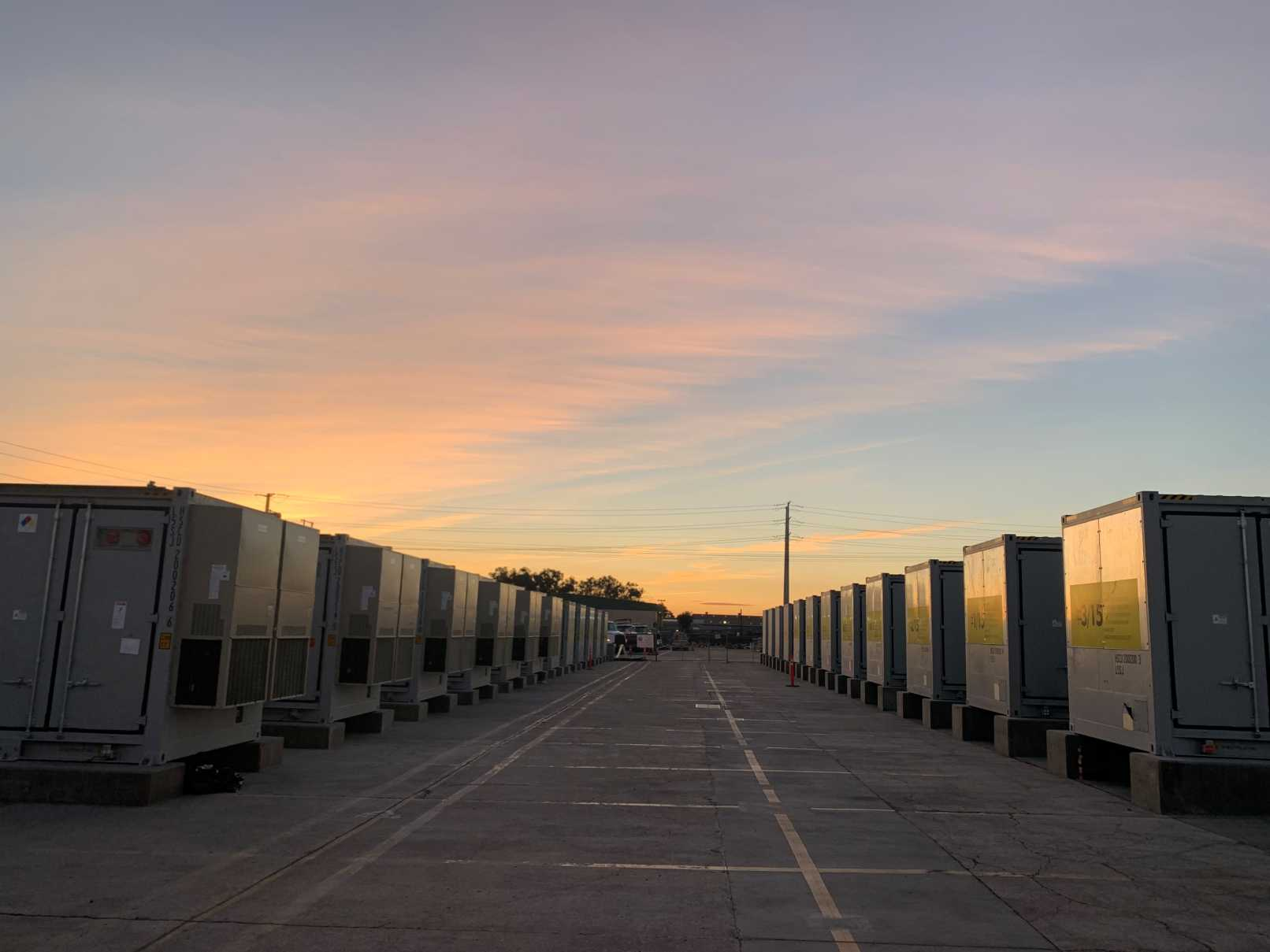
Battery storage projects rarely run into trouble because of the battery. They stall at commissioning, when the EMS, plant controller, SCADA and grid connection must work together for the first time. In the U.S., they are also stalling when controls suppliers can’t show they meet new federal and state rules. Katy Perry, who leads RES’ North American energy storage business, explains why.
As battery energy storage systems (BESS) become an increasingly important part of the energy transition, delivering successful projects is no longer just about battery technology.
The scale of that shift is hard to overstate. Global energy storage capacity is forecast to increase sixfold between 2025 and 2030 at a 42% compound annual growth rate, with China and the U.S. leading the way (GlobalData, via pv magazine). The U.S. energy storage market installed a record 18.9 GWh in Q2 2026, as projects shift toward longer-duration systems. Wood Mackenzie and the American Clean Power Association (ACP) now expect cumulative U.S. storage capacity to reach 207 GW/715 GWh by 2031 (Wood Mackenzie).
That trajectory is why the challenges Katy describes below matter more each quarter: more projects, more vendors, more grid connections mean more points where systems need to work together. In this article, she shares her perspective on how the industry is evolving, why integration has become one of the sector’s biggest challenges and how RES is helping customers navigate a more complex energy landscape.
Cheaper hardware, more complex projects
Although BESS technology has been around for some years now, the market around it is still maturing, and the technology continues to advance at pace. This advancement brings many benefits: lower hardware costs, improved performance, greater standardization and a wider choice of vendors and products globally. This may sound like the perfect formula for more successful projects, but there is a significant caveat. In our experience, as the hardware advances and the market matures, it brings more opportunity but also greater complexity, and with it more risk.
Working in one of the world’s most advanced utility-scale energy storage markets, Katy has seen first-hand how customer expectations have evolved as battery technology has matured.
One of the most significant changes she has observed is the growing disconnect between falling hardware costs and increasing project complexity.
“As battery hardware has become cheaper and more standardized, customers have understandably assumed that projects overall would also become simpler,” she explains. “However, in practice, the opposite has happened.”
Today, many of the challenges facing energy storage projects lie beyond the battery itself. Procurement, system integration, increasing regulatory compliance and ongoing operations and maintenance (O&M) have become critical factors in determining project success.
“The market increasingly demands partners capable of managing that complexity end to end,” Katy says.
The challenge is no longer centered on the battery alone. It is ensuring every component, system and stakeholder works together effectively throughout the project lifecycle.
Why integration matters more than ever
According to Katy, the importance of integration often becomes most apparent during commissioning of a utility-scale BESS project, when separate systems are required to work together under real operating conditions.
“Integration risk is what customers tend to underestimate,” she says. “Each element may perform as expected on its own, but the EMS, SCADA, plant controller, BMS and PCS must all communicate with each other and with the grid in real time.”
That means the energy management system (EMS), supervisory control and data acquisition (SCADA), power plant controller (PPC), battery management system (BMS) and power conversion system (PCS). When these systems are supplied by different vendors and developed independently, issues can emerge late in the commissioning process, often creating costly delays and impacting critical project milestones.
This reality has elevated integration from a technical consideration to a core design principle. Success depends not only on individual components performing well, but on the entire utility-scale storage system working reliably as one.
Compliance has reached the controls layer
For U.S. projects, there is now a second integration question: not just whether the systems work together, but who supplies them. Foreign entity of concern (FEOC) rules tied to federal tax credits, Federal Communications Commission (FCC) rules on covered equipment and Texas’s Lone Star Infrastructure Protection Act all reach beyond the battery to the hardware and software that control it.
That means checking ownership, supply chain and remote access for every part of the controls stack before signing, not at commissioning. RESolve was built with these requirements in mind – because we don’t sell batteries or inverters, customers are free to choose the equipment that’s right for them.
Built on real-world experience
RES was an early pioneer in BESS, and that long-standing experience continues to shape how we approach today’s challenges. Drawing on more than a decade of operational experience across 26 projects and 13 battery and inverter suppliers globally, we’ve seen first-hand how storage systems perform across different markets, networks and regulatory environments.
For Katy, that operational experience is one of RES’ greatest strengths.
“It is not just a matter of having been in the market early,” she says. “It’s about having seen how these systems behave in real operation, across different countries, different grids, different regulatory requirements and different levels of technological maturity.”
As the market heads toward the 207 GW/715 GWh Wood Mackenzie and ACP forecast for 2031, that depth of operational experience stops being a nice credential and becomes a genuine differentiator. Scale without proven integration experience is exactly where projects run into trouble.
Those lessons have helped shape the solutions RES develops today and continue to inform how we support customers as energy storage assumes a greater role in modern electricity networks.
How RESolve brings systems together
To address these growing integration challenges, RES has developed RESolve, a digital platform that brings together the core control systems of a storage facility into a single architecture.
RESolve integrates the EMS, PPC, SCADA and Electronic Security Perimeter (ESP), while connecting them with RES’ engineering expertise and grid modeling capabilities. Integration doesn’t end at commissioning. Through long-term service agreements, RES stays accountable for the controls stack as grid codes, compliance rules and market opportunities change over the life of the asset.
As RES is not an OEM for batteries or inverters, RESolve works across suppliers rather than being tied to one battery brand. Equipment decisions stay with the customer, and one partner remains accountable for the full controls scope.
The result is an approach built around the project’s success. Bringing integration under one partner can reduce project CAPEX. Grid modeling expertise reduces interconnection risk. And because RES manages whole site commissioning, the control system at the center of the project is used to find and fix issues quickly, keeping commissioning on schedule.
Looking ahead
As battery storage continues to evolve, Katy expects the demands placed on projects and technology providers to keep rising.
“The market will become increasingly demanding,” she says. “We’ll see expansion into new geographies, longer-duration storage, stricter regulatory compliance and cybersecurity requirements, and power grids that increasingly rely on batteries for critical services.”
Energy storage is no longer an emerging technology. It is a critical part of the electricity system, supporting grid stability and enabling the transition to a lower-carbon future. The more the grid depends on storage, the higher the cost of systems that don’t work together.
As that role grows, so too does the need for solutions that can manage complexity, adapt as the market changes and perform reliably for the life of the asset. Katy believes success will depend on taking a broader view of what makes storage projects work.
“The future of energy storage isn’t just about the batteries themselves. It’s about bringing together technology, people and expertise to create systems that perform reliably in increasingly complex environments. That’s where I see the greatest opportunity for RES, to continue helping customers unlock the full value of energy storage as the energy transition accelerates.”
About:
Katy Perry, PMP, Director of Energy Storage, Digital Solutions, North America
Katy brings more than 15 years of energy industry experience across traditional power generation – steam, gas, and nuclear – and renewables, including hydrogen, wind, solar, and battery energy storage (BESS). She leads the North American Energy Storage business at RES Digital Solutions, directing operations and execution for RESolve™, the company’s proprietary EMS and PPC platform. Her field service and project management background informs a rigorous approach to the integration and controls details that determine the success of every BESS deployment.