
Solutions
Our passionate and experienced people deliver successful clean energy projects globally.
Technologies
Driving a clean energy future through state-of-the-art renewable technologies.
See all technologiesResources
Browse our latest resources, including company updates, customer stories, industry insights, and research reports.
See all resourcesCareers
Join a collaborative team of passionate individuals who engage in meaningful, stimulating, and world-changing work.
Learn moreAbout RES
We live our mission, celebrate the people making it happen and transform the way the world produces and consumes energy.
See about usOur offices
Like our business, we’re truly global – but proudly local. Find contact and location details for every RES office.
Contact us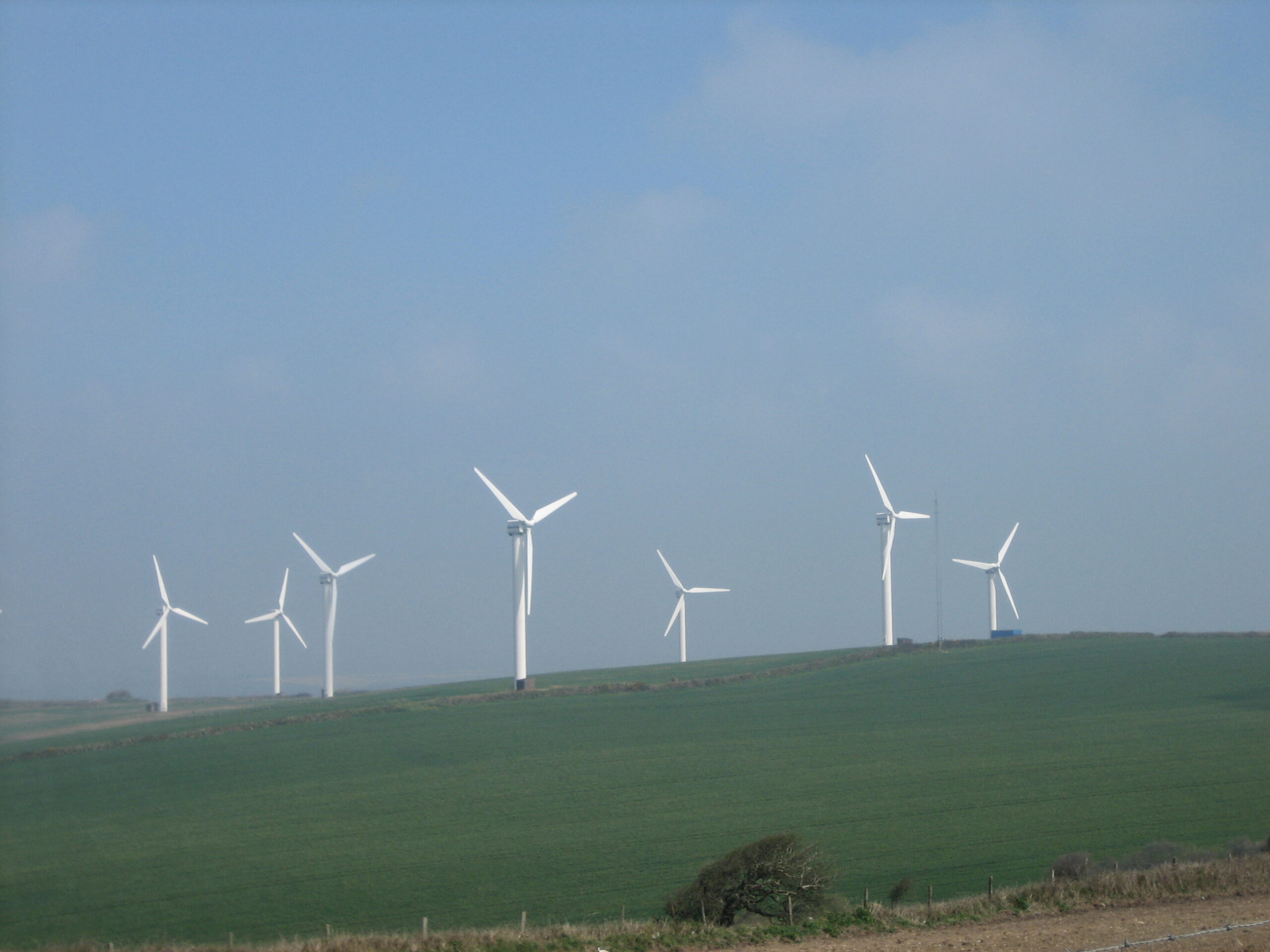
UK onshore wind is 35 this year, about as old as the internet. For Wind Energy Week 2026, we’ve gone back to the people and places that got it started, and asked what the next 35 years look like for the sites that came first.
Where it started
In 1991, the UK’s first commercial onshore wind farm went up in Cornwall. The next year RES built the second: Carland Cross, with 15 turbines and capable of generating 6 MW in total.
But our story goes back another 10 years, to 1981. That’s when a small team of engineers set out to build a new wind turbine. That team became RES.
Today we’re the world’s largest independent renewable energy company, working in 24 countries, with more than 29 GW of projects delivered. Back then, it was a handful of engineers determined to prove wind could work at scale.
Since 1991, the technology has grown a lot. Bladena, a wind turbine blade engineering specialist and part of RES, is currently testing an 88-metre blade with ORE Catapult. That one blade is nearly twice the height of the original Carland Cross turbines.
The people
When UK onshore wind got going, RES had nine employees. Jack Noakes was number nine. Thirty-five years later he’s still here, now as our Group Chief Engineer.
Jack built his first wind turbine at 12. His first job at RES was a proposal linked to a 1 MW turbine design, when plenty of people thought a turbine that size would never be practical.
Since then, his career has taken him to King Mountain in Texas, the largest wind farm in the world when RES built it in 2001, and to the strong winds of Souliella in France.
Those nine employees are now 4,500, across 24 countries. And some of the engineers who’ll repower today’s wind projects may not even be born yet.
The places
For 35 years, many people across the UK have lived near onshore wind projects. They’ve watched turbines go up in places they know well and, at plenty of sites, seen them replaced by fewer, larger turbines.
Onshore wind community benefit funds now give UK communities £75m a year, according to RenewableUK. We wanted some of that benefit to show up on people’s bills as well.
So in 2013, after listening to the communities around our projects, we started our Local Electricity Discount Scheme (LEDS). Every year, it gives a discount to the properties closest to participating projects, whoever their electricity supplier is.
LEDS has now provided more than £10.3m in bill discounts, through over 50,000 payments. In 2025 alone, more than 7,000 properties shared almost £1.9m, across 37 projects in Great Britain and Northern Ireland.
What comes next
Back at Carland Cross, the original 15 turbines came down in 2013. Ten bigger ones went up in their place, taking the site from 6 MW to 20 MW, more than three times the capacity.
A lot of the UK’s first wind farms are now reaching the end of their original design life, so many more sites will face the same choice. Analysis by Nadara, cited by RenewableUK, suggests repowering can boost a site’s output three to 10 times, often using the grid connections and infrastructure already in place. Whether those projects go ahead comes down to the rules around them. Clear, stable planning and grid frameworks give private investors the confidence to back them.
It won’t be right for every site, and each one needs looking at on its own merits. But the industry has spent 35 years building sites, grid connections and relationships with the people who live nearby. Getting more out of what’s already there matters now: the more efficiently we run the system we’ve got, the cheaper electricity gets, and the more sense it makes for homes and businesses to switch to it. And the communities who hosted wind first should be first in line for what comes next.
That’s a big part of our work today. RES supports 45 GW of renewable assets. Our engineers and digital tools help owners get more out of the turbines they’ve got, and work out what to do with them next.
Onshore wind met 15% of UK energy demand in the first quarter of 2026, according to RenewableUK. It’s been doing the job for 35 years. We think it’ll be at the heart of an affordable energy system built around renewables, and we’re confident we’ll reflecting on its success in doing so in another 35 years time.
