
Solutions
Our passionate and experienced people deliver successful clean energy projects globally.
Technologies
Driving a clean energy future through state-of-the-art renewable technologies.
See all technologiesResources
Browse our latest resources, including company updates, customer stories, industry insights, and research reports.
See all resourcesCareers
Join a collaborative team of passionate individuals who engage in meaningful, stimulating, and world-changing work.
Learn moreAbout RES
We live our mission, celebrate the people making it happen and transform the way the world produces and consumes energy.
See about usOur offices
Like our business, we’re truly global – but proudly local. Find contact and location details for every RES office.
Contact usManaging co-located projects: Turning hybrid complexity into performance
by RES | Jun 24, 2026 | Reading time: 2 min
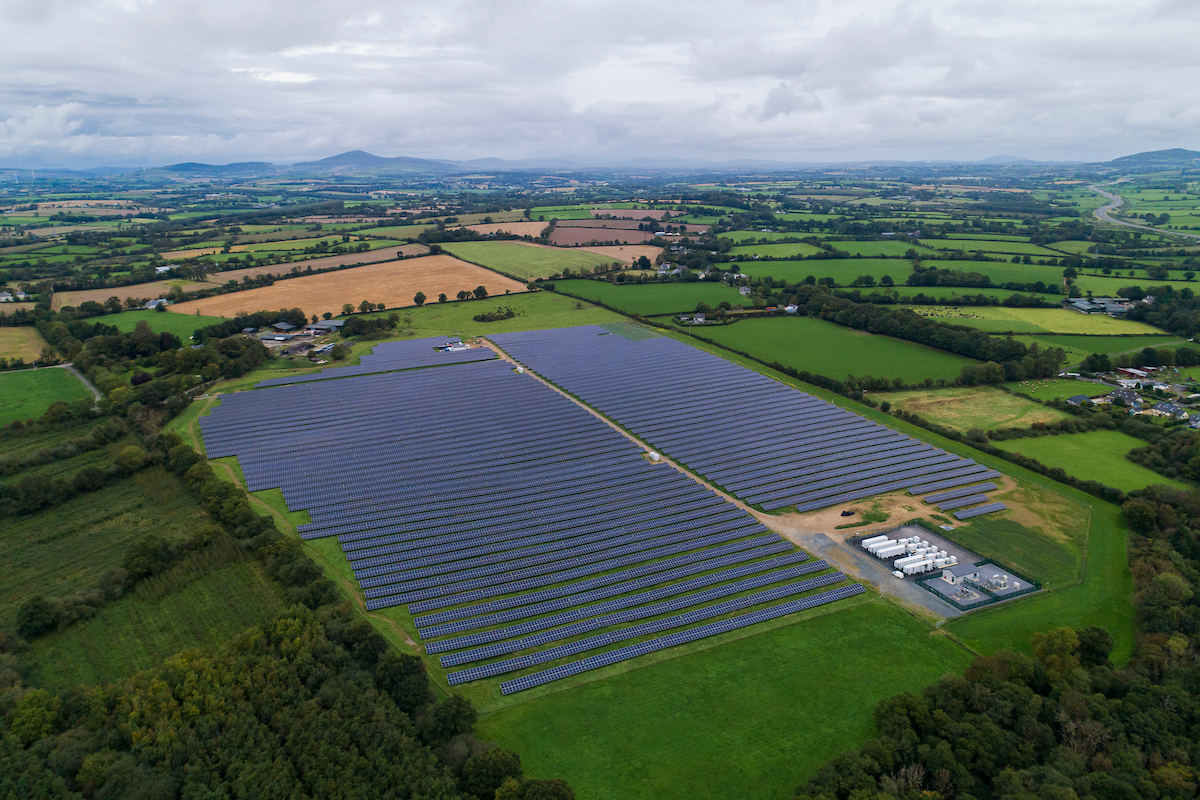
Across global renewables markets, hybrid and co-located projects are rapidly becoming the new standard. Pairing technologies such as solar and storage, or wind and storage, allows developers to maximise land use, improve grid stability and open up new revenue streams. The pace of adoption is accelerating, particularly in markets such as the US, Europe and Australia where policy, land efficiency and grid constraints are driving innovation.
But with scale comes complexity. Every site brings its own combination of market rules, pricing structures and operational realities. The line between generation and storage is increasingly blurred, and the real challenge lies in how these assets are managed – not just technically, but commercially.
The optimisation challenge
Hybrid projects require constant and careful balance between technical performance, commercial value and grid requirements. There is no single model that works for every site. Instead, owners must navigate shifting regulations, evolving clearing prices and new routes to market, all while maintaining the flexibility to adapt as conditions change.
Storage sits at the heart of this transformation. Once viewed primarily as a grid service, it is now becoming a strategic tool for value creation – used to optimise generation, capture price differentials and respond dynamically to market signals. That shift is redefining what success looks like for asset owners: it is no longer about capacity alone, but about agility, foresight and integration.
This demands deep technical understanding, sophisticated modelling and an asset management approach capable of anticipating change rather than simply reacting to it.
Managing complexity at scale
Hybrid projects reflect a broader truth about the energy transition: integration is now the key to performance and progress. Technologies, markets and value streams are converging, and managing that convergence well will separate the leaders from the rest.
It is here that advanced asset management, sophisticated digital systems and real-time market insight play an increasingly strategic role. Integrating data, digital systems and local market insight is key to turning operational complexity into measurable performance. The ability to model multiple value scenarios, assess regulatory shifts and optimise dispatch in real time is what turns a hybrid site from a challenge into a competitive advantage.
Drawing on global operational experience, RES approaches hybrid optimisation as a systems-level challenge rather than a technical one. Its full-lifecycle asset management model is supported by digital platforms such as RESolve, alongside specialist 24/7 control centres. This integrated framework helps owners align technical performance with commercial and regulatory requirements, ensuring hybrid and co‑located projects deliver long‑term, sustainable value.
Flexibility as the foundation
Hybrid and co-location is not just about shared land or interconnection; it is about integrating capabilities to deliver flexibility, reliability and future value. As renewables portfolios become more diverse, success will increasingly depend on how well owners and operators combine data, modelling and operational experience to make informed decisions.
The hybrid future will not be defined by technology alone, but by the ability to adapt – to optimise performance, respond to markets and evolve with regulation. Flexibility will be the key measure of resilience as markets continue to evolve in the next phase of the energy transition.
At RES, we see co-located and hybrid projects as a proving ground for what comes next: a more integrated, intelligent and agile approach to renewable asset management. The challenge for the industry now is to keep pace with the potential these projects can unlock.

