

Why Europe is entering the performance stage of the energy transition
by RES | Apr 09, 2026 | Reading time: 5 min
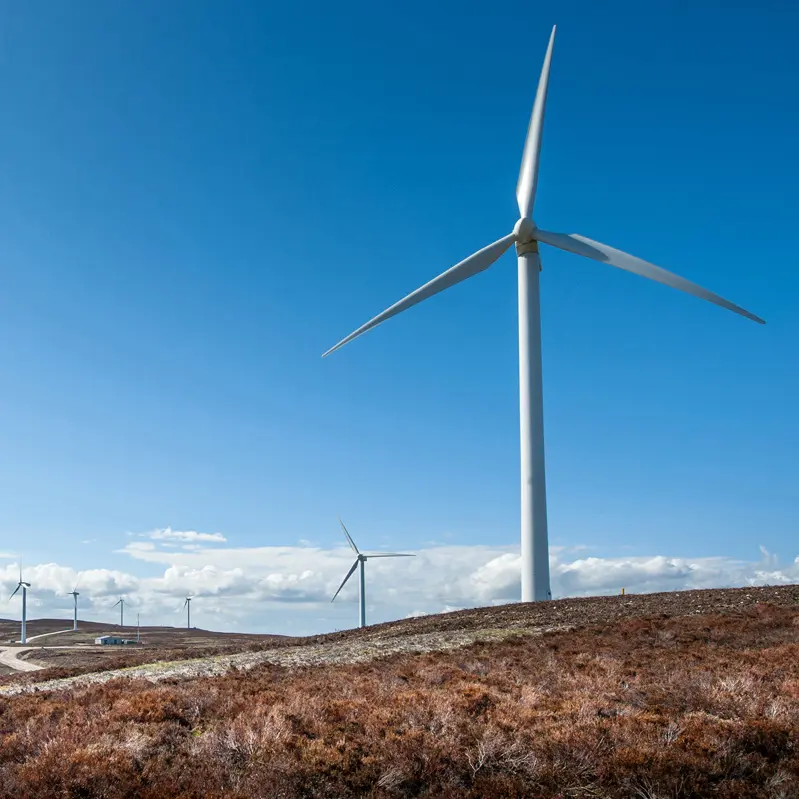
Europe is still deploying renewable energy at pace, and the numbers make that clear. WindEurope’s latest annual statistics report points to €45 billion invested in new wind energy projects last year, financing the development of 21 GW of new capacity in the years ahead. With onshore wind expected to account for 90% of all new installations in 2025, the region added 17.2 GW in a single year, setting a new record.
That momentum matters. But as the market matures, the conversation is beginning to shift.
The era of large-scale deployment is far from over. Yet installed capacity alone is no longer the only measure of success. As renewable portfolios grow, attention is increasingly turning to how assets perform over time: how reliably they operate, how effectively they respond to market and grid conditions, and how much value they deliver over their full working life.
This is the next stage of the energy transition. It is no longer only about building more. It is about making sure what has been built performs consistently, efficiently and predictably.
From deployment to long-term performance
Real-world constraints are helping drive this change. Grid connection bottlenecks continue to delay new projects. Curtailment and intermittency are putting greater pressure on project economics. Power markets are becoming more dynamic and, in some cases, more volatile. In this environment, every connected megawatt needs to work harder.
For asset owners and investors, the focus is widening. The question is no longer just how to finance and build projects, but how to protect availability, manage operational risk and secure long-term returns in an increasingly complex market.
That is why performance is becoming such a defining issue across the sector.
In this context, RES has now surpassed 3 GW of solar and battery energy storage systems under operations and maintenance contracts in Northern Europe, contributing to a total regional services portfolio of 4 GW across wind, solar and storage. The milestone reflects strong commercial momentum, but it also points to something broader taking place across the market: operational excellence is becoming a key driver of growth.
The performance phase of renewables
“The renewables sector has entered what I would call the performance phase,” says Juan Gutiérrez, CEO Services at RES.
“For years, the industry’s primary challenge was deployment: scaling technology, securing capital and building supply chains. That remains essential. But today, the assets that deliver exceptional performance are demonstrating the long-term value of renewables and strengthening confidence in the next generation of projects.
“Performance does not happen by accident. It is the result of consistent maintenance, strong operational practices and a long-term mindset.”
Across the UK, Ireland, Germany, Poland, Norway and Sweden, renewable portfolios are expanding rapidly. Solar and storage in particular are driving that growth, with RES supporting 3.4 GW of these technologies under O&M in Northern Europe alone. Globally, the company now manages more than 45 GW of renewable assets.
For Gutiérrez, scale matters because of the knowledge it creates.
“Scale gives you data, and data gives you insight,” he says. “When you manage gigawatts across multiple technologies and markets, you develop pattern recognition. You understand optimisation levers, performance drivers and regulatory differences. When that knowledge is combined with strong operations and maintenance, asset management expertise and advanced digital tools, you are much better placed to anticipate issues and keep assets running safely and reliably throughout their life.”
Why storage is accelerating the shift
The growth of battery energy storage is reinforcing the role of performance even further.
Storage is helping renewable systems become more flexible and responsive. It can reduce the effects of intermittency, support grid stability and improve the commercial value of wind and solar generation. As deployment accelerates, well-managed battery energy storage systems are showing how renewables can deliver consistent value while also supporting the wider electricity system.
“Batteries add a new dimension to renewable portfolios,” says Gutiérrez. “Performance is measured in milliseconds, and value depends on how intelligently assets are operated in the market. That requires a combination of deep operational expertise and digital optimisation.
“When storage is managed proactively, with a strong focus on long-term reliability, it strengthens the investment case for renewables.”
Recent UK projects reflect the scale and sophistication of this trend. They include asset management for the Coalburn battery project, at 500 MW / 1 GWh, one of the largest BESS facilities in Europe, and O&M for the 373 MW Cleve Hill Solar Park. Portfolio renewals, including a five-year agreement with The Renewables Infrastructure Group (TRIG), also reflect growing confidence in independent service providers with multi-technology expertise.
Hybrid sites are becoming more important too, with wind, solar and storage increasingly co-located.
“Optimising these hybrid sites can significantly improve asset value,” Gutiérrez says. “It also shows how integrated portfolios can deliver strong and stable performance when technologies are managed together rather than in isolation.”
Digitalisation is now central
As renewable penetration deepens, digital capability is becoming central to operational success.
Advanced monitoring, predictive analytics and data-led optimisation are helping operators maximise availability, extend component life and improve commercial outcomes. In 2024, RES formalised its digital solutions business, bringing together remote monitoring, predictive analytics and performance optimisation within its core services offering.
“Data-driven asset management allows us to improve performance, extend component life and optimise operational strategies,” says Gutiérrez. “We often detect early signals that, if left unaddressed, could become more serious problems. Acting early protects people, protects the system and protects long-term value.
“That is why maintenance should not be seen simply as a cost. It is an investment in safety, reliability and long-term performance.”
This is becoming even more important as first-generation renewable assets move into more mature stages of operation. Owners are increasingly focused on extending asset life, managing component obsolescence and reducing lifecycle cost, all of which depend on strong data, engineering insight and robust operational decision-making.
A more mature market for services
As the services market evolves, independent providers are taking on a more prominent role alongside OEM-led models. In this context, RES recently maintained second place in Wood Mackenzie’s global Solar PV O&M rankings and remains the independent provider with the broadest geographical reach in the sector.
For Gutiérrez, independence matters because it supports long-term alignment with asset owners and investors.
“When operational performance is strong, it builds confidence and supports continued expansion,” he says. “Investors want partners who are focused on long-term asset value and performance. Independence helps create that alignment.”
Northern Europe also highlights another reality of the market: it is not one uniform operating environment. Each country has its own regulatory framework, grid characteristics and commercial dynamics. Scale helps transfer knowledge across markets, but success still depends on strong local understanding and operational depth.
The next stage of the transition
Europe has already shown that it can build renewable energy at scale. The next challenge is making sure those assets continue to deliver resilient, predictable performance over decades, even as system complexity increases.
That is why operational excellence is becoming so important. Asset management is no longer a support function sitting behind development. It is becoming a strategic lever in its own right, shaping project value, investor confidence and long-term market performance.
In Northern Europe, where electrification, hybridisation and storage are all accelerating, the services market is no longer secondary to development. It is becoming one of the main ways long-term value is secured.
Increasingly, it is clear that operational excellence and growth now go hand in hand.
This article originally appeared in Energias Renovables in Spanish, here: Europa, hacia una transición energética impulsada por el rendimiento

